
We had an early morning wake up call (2:00 am) to head to Abu Simbel.
This was an optional excursion – and a few people had opted out due to the early morning. It took about 3 hours each way to get there, not for the faint of heart. Two temples were carved into a cliff along the Nile. If you have seen images of Petra in Jordan – it looks similar at first glance.
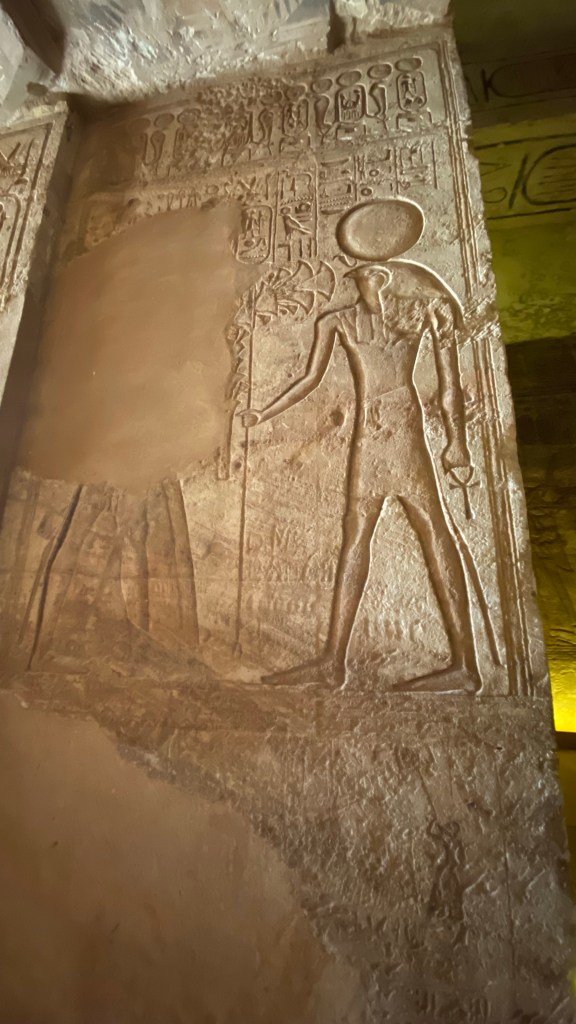
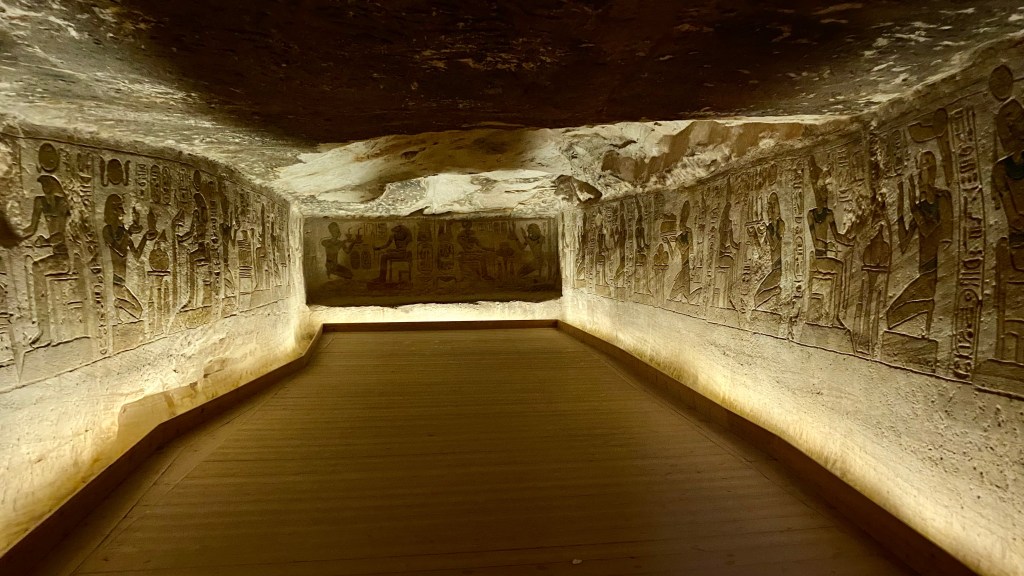
These temples were provisioned by King Ramses II to be built. The interesting detail with these temples was not only were they created, but they actually had to be moved to a new location due to rising waters from the new Aswan High Dam. Between 1963 and 1968 a team dug away the top of the cliff and completely disassembled both temples, reconstructing them on high ground more than 200 feet above their previous site. Keeping them safe from rising water.
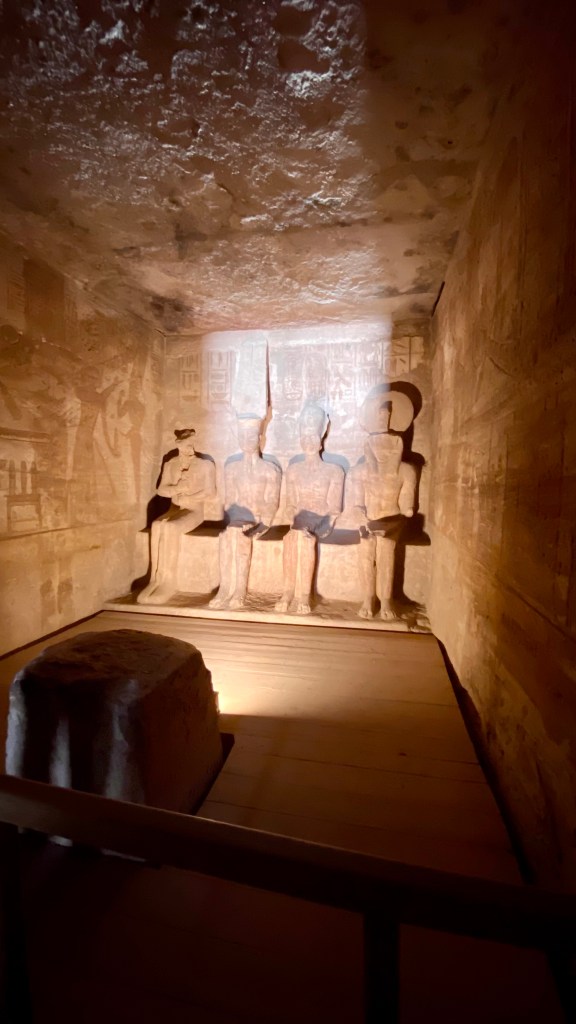
There are four 66 foot tall statues on either side of the main entrance to the temple. On two days of the year (February 22 and October 22), the rays of the morning sun penetrate the whole length of the temple and illuminate the shrine in its innermost sanctuary.

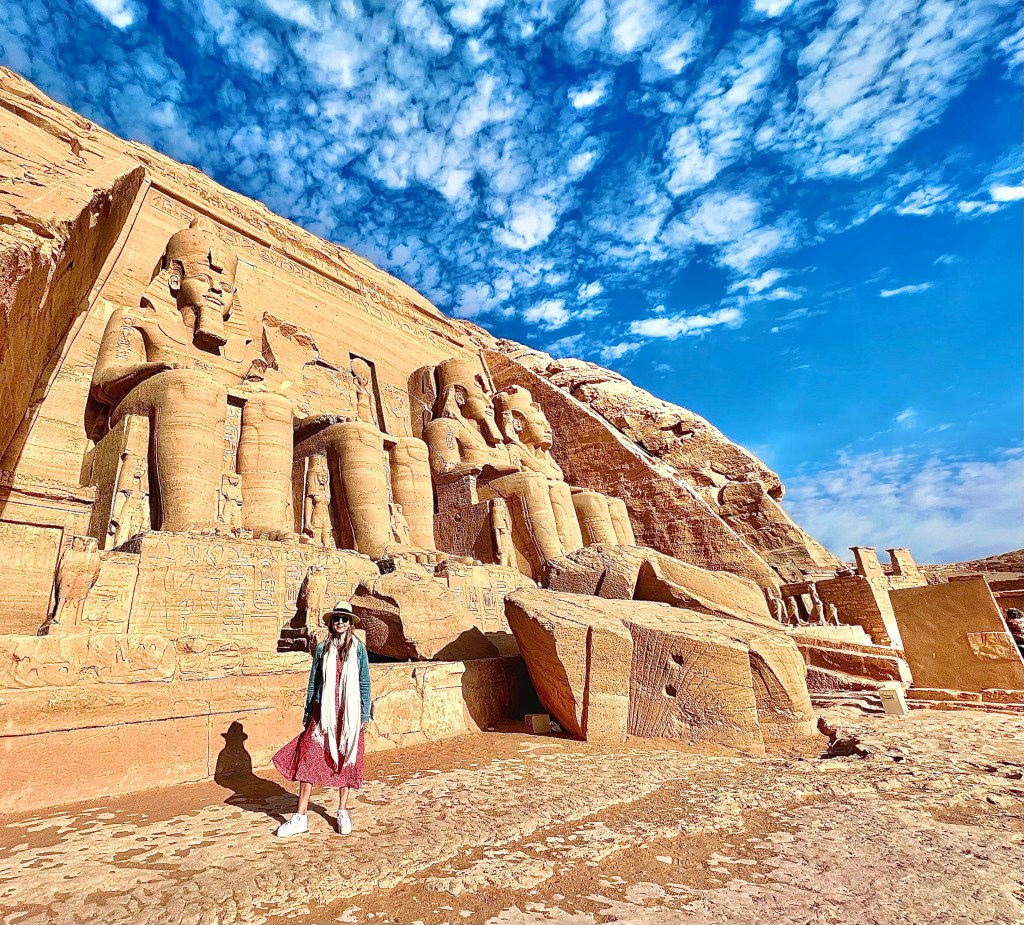
Nearby the main temple is a smaller one, dedicated to Nefertari that is adorned with 35-foot statues of the king and queen. This is relatively uncommon to have a queen made in similar size to the king – they attribute that to the love he had for her. I guess she was his favorite wife! (He had many wives and even more children – supposedly 200!)
We figured that most people would go to the main temple after our guide explained some of the history – so we headed over to the smaller temple. Neferari’s temple – let’s go girls! It was stunning.
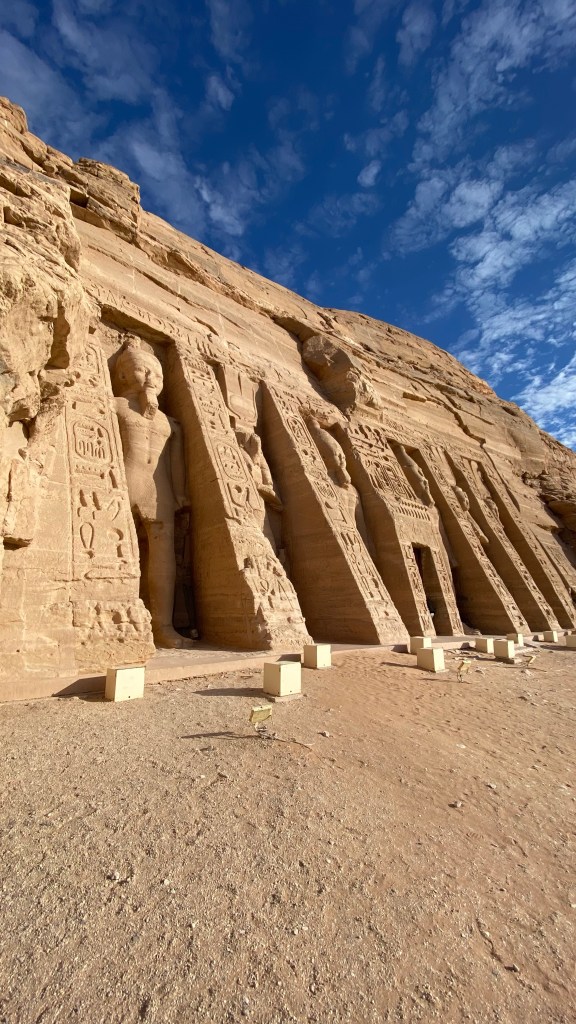

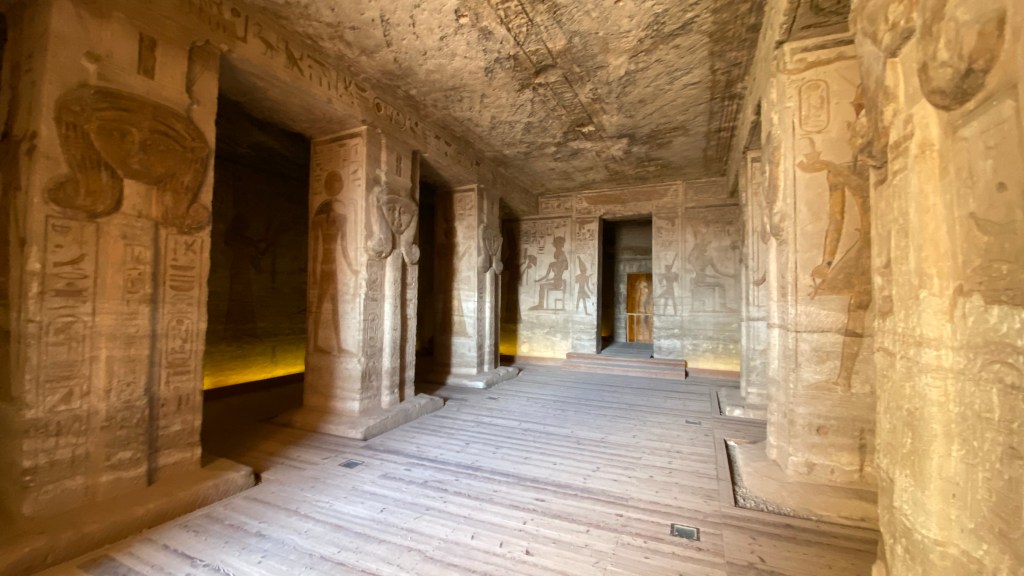
We had killed enough time and then headed over to the main temple. Although the smaller temple was amazing, the main temple had so many unique features.

For the sake of not making this post too long – I’ll break up the second part of our trip in a separate post! Our time in Aswan/Kom Ombo was short – but made for a very long day.
Other activities:
- Island of Philae
- Kom Ombo
- Temples of Haroeris and Sobek
- Nilometer
- Crocodile Mummy Museum
 Scribbles and Snapshots
Wow, Aswan looks amazing. I can’t believe people would choose sleep over seeing that. Can’t wait to see more pics when you get back.
LikeLike