Montserrat & you guessed it – more wine tasting!

September 7, 2024

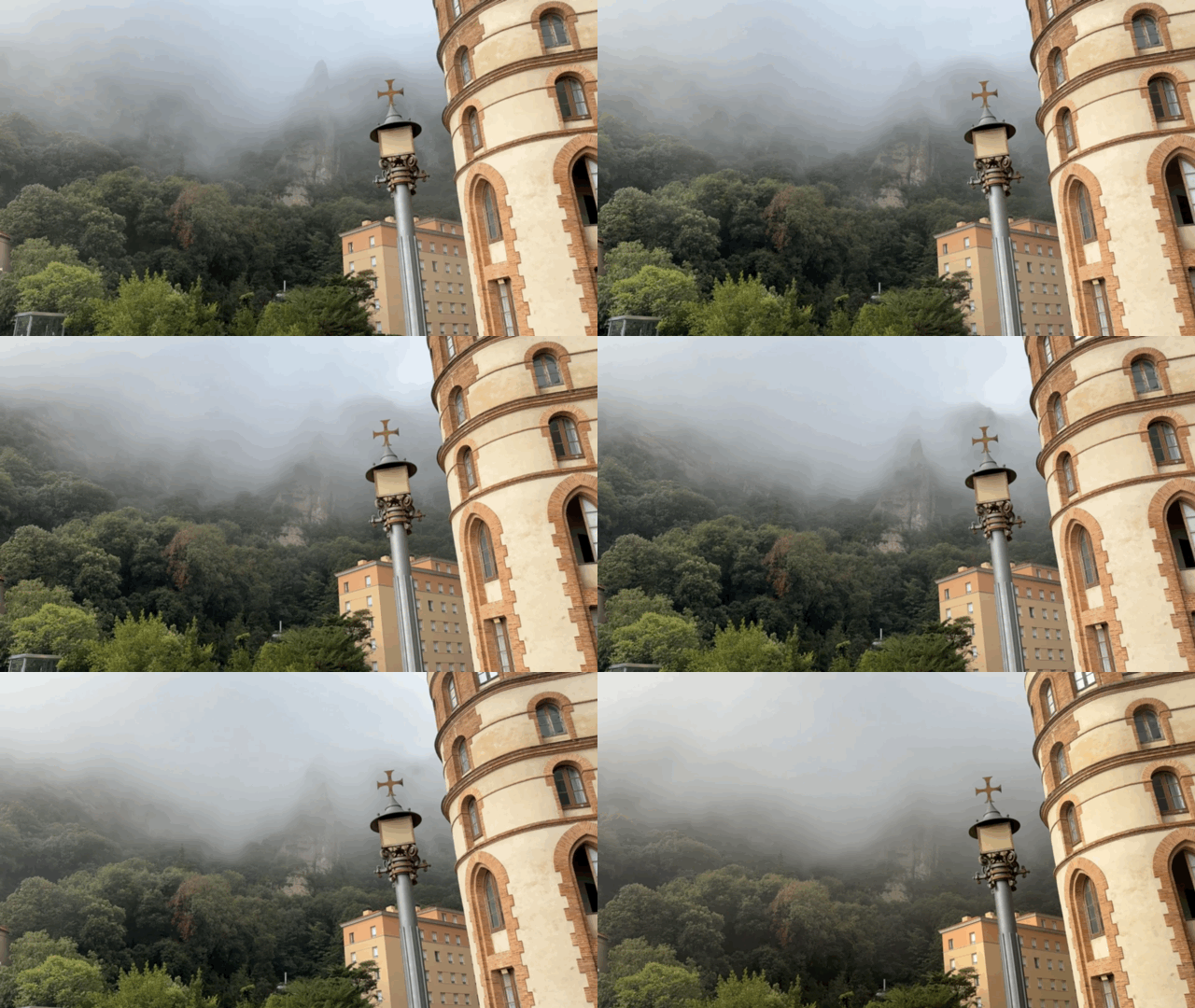
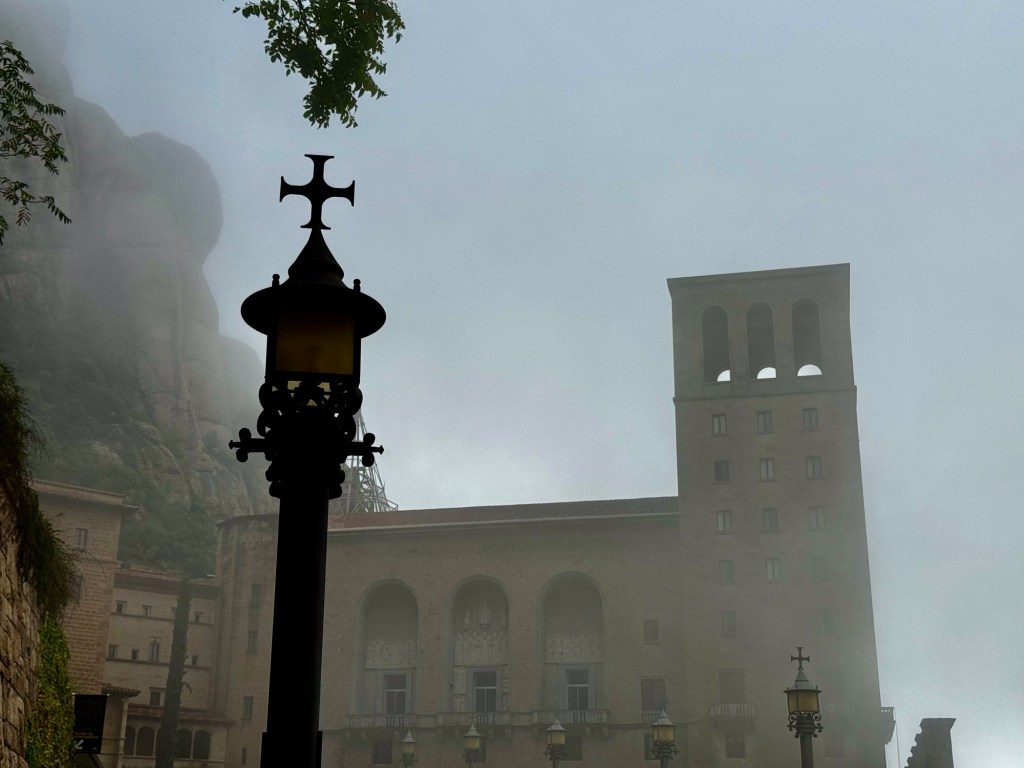
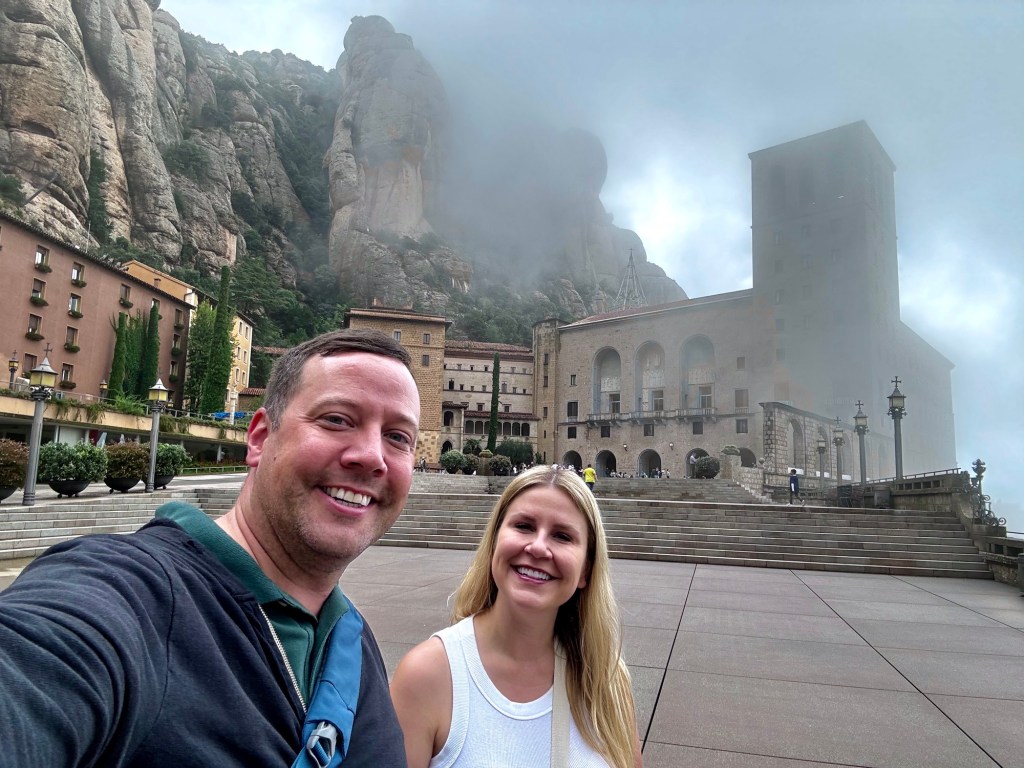
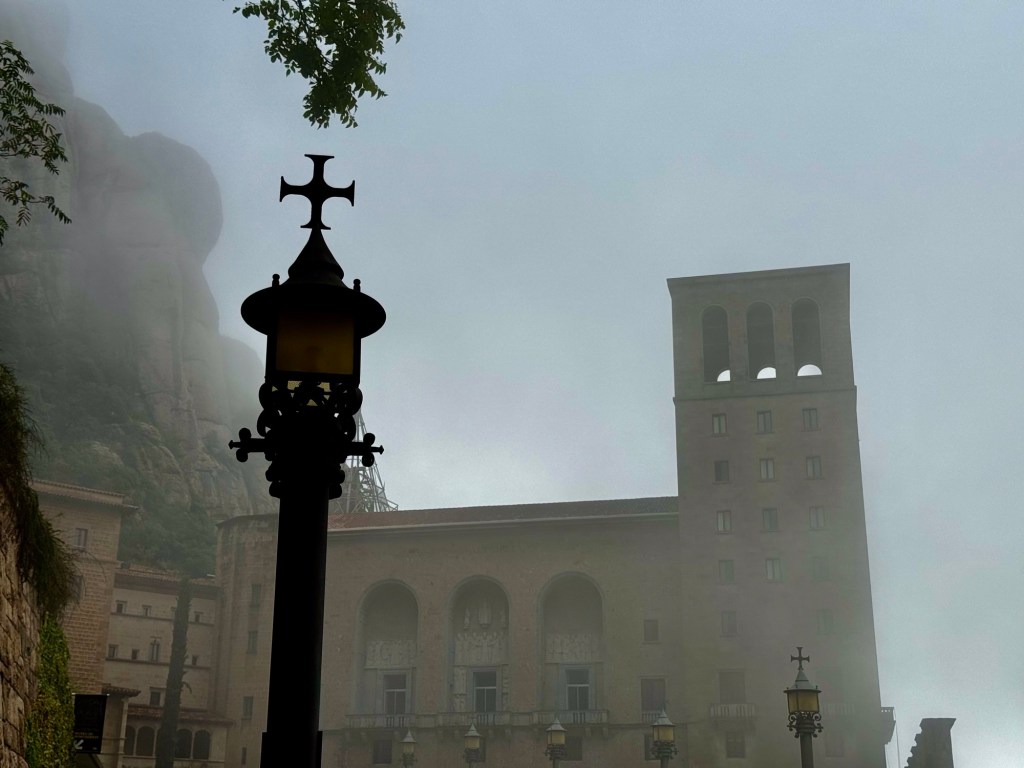
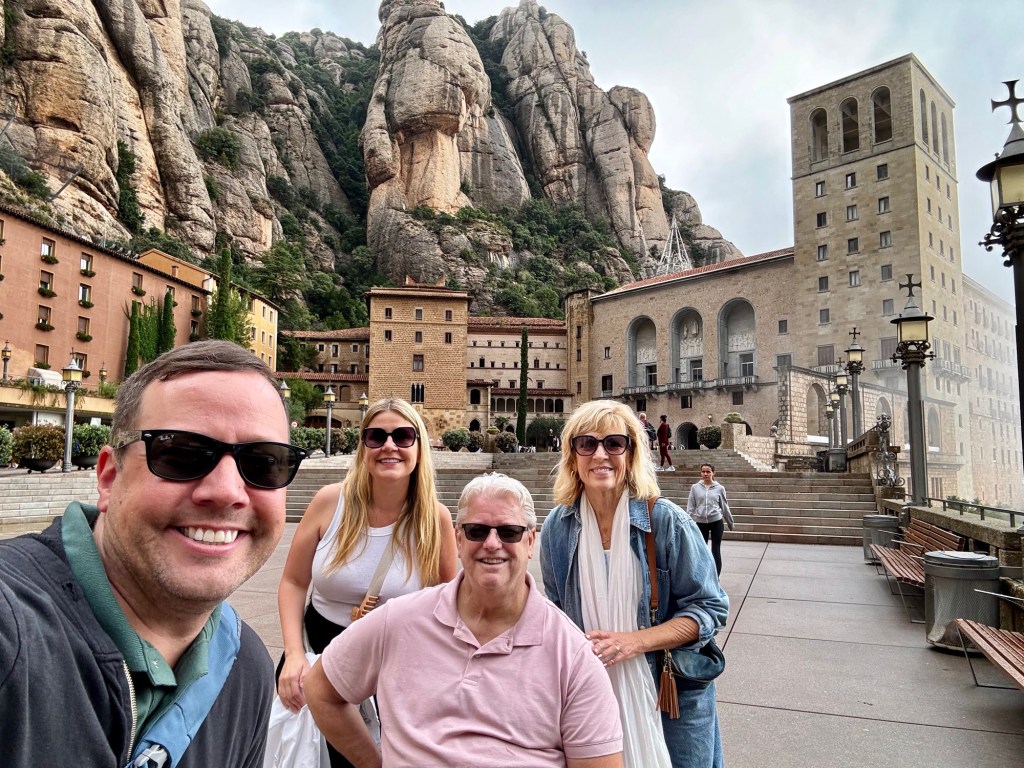
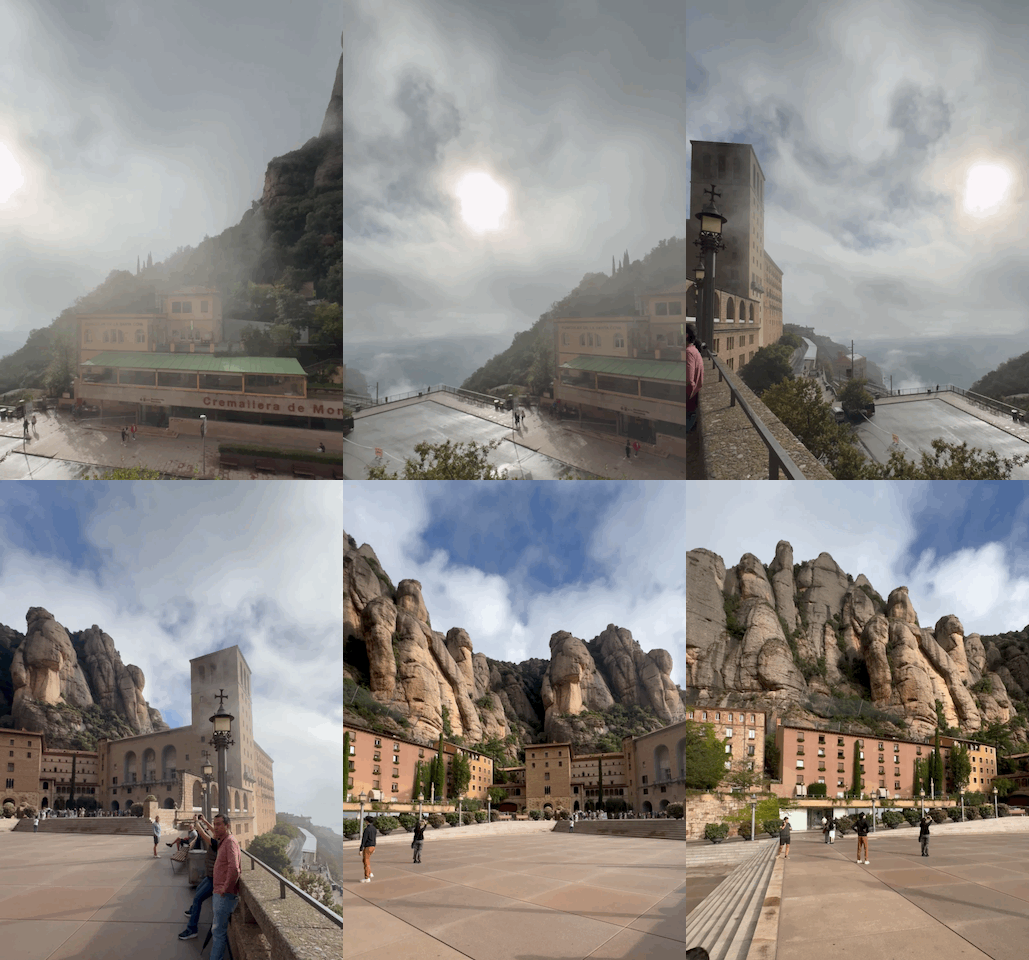
Our final full day in Spain began in Montserrat, which was only about an hour drive from our hotel. We had another beautiful sunrise from Sitges, as we started to climb the mountain – we realized rather quickly we were really socked in with the cloud cover.

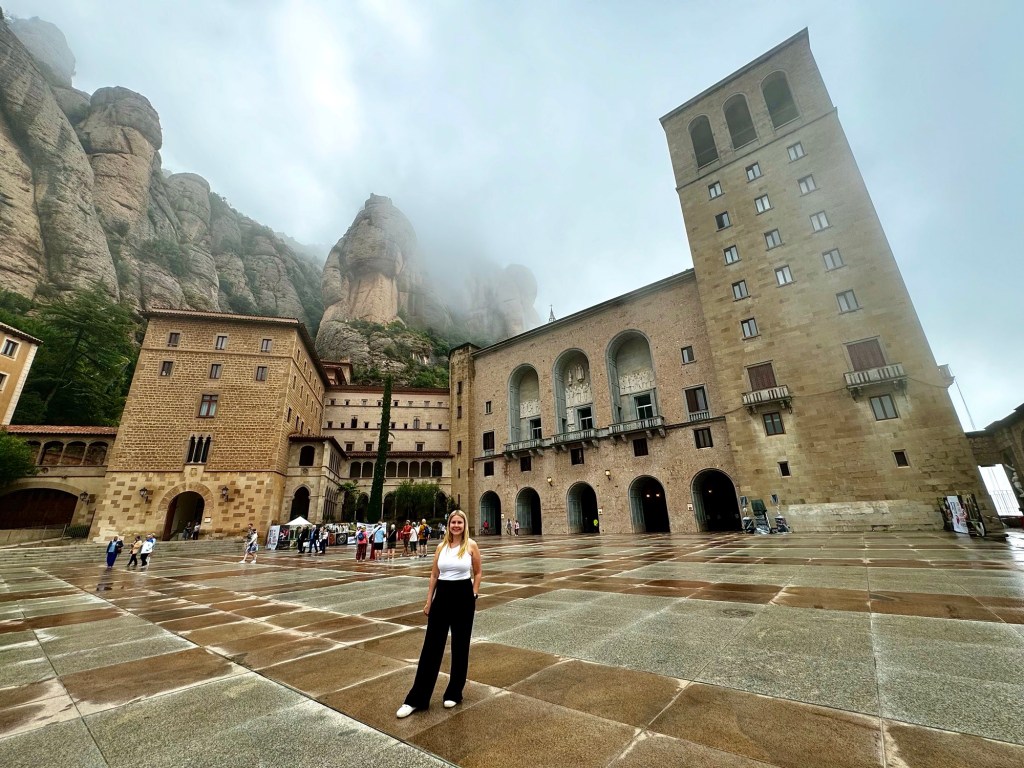
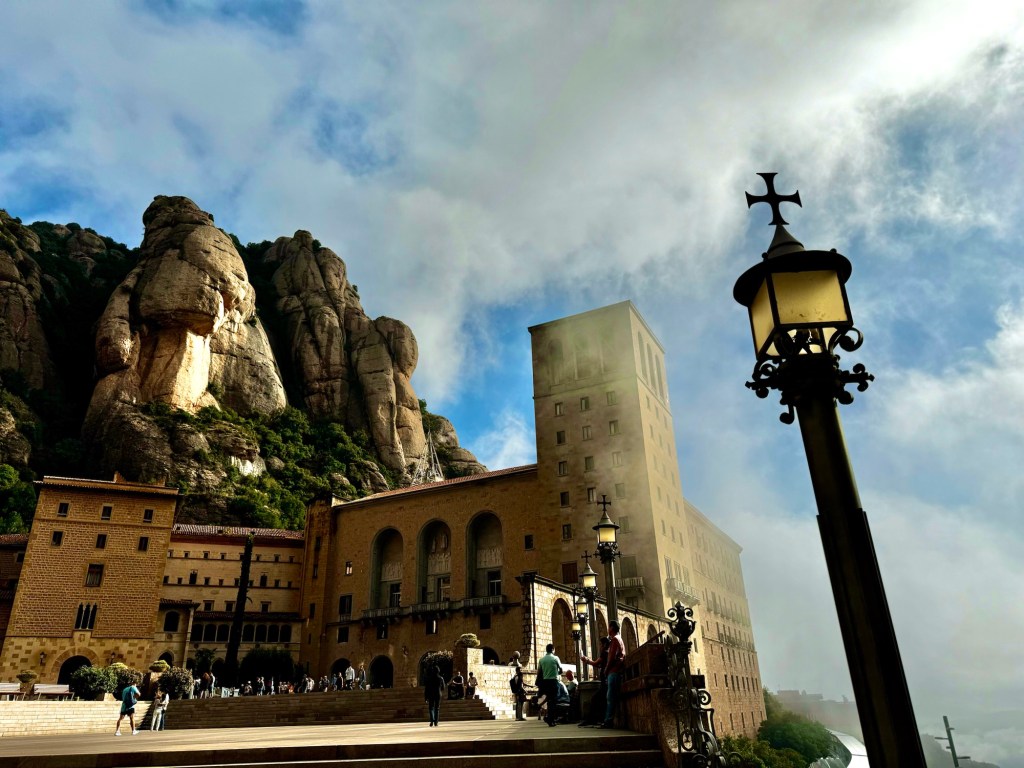
Montserrat Monastery is located in the Montserrat mountain range near Barcelona, Spain. It is a significant pilgrimage site with a rich history dating back to the 10th century. Originally established as a small chapel, it evolved into a Benedictine monastery and became renowned for housing the Black Madonna, or La Moreneta, a statue believed to date from the 12th century.

The monastery’s construction features Romanesque and Gothic architectural styles. They used local limestone that blends beautifully with the dramatic mountain landscape. Over the centuries, it has undergone several renovations and expansions, which has only made it that much more impressive.

I had received an email a day or two before from Montserrat explaining that there was a special church service that day. Candidly, it wasn’t really clear (likely lost in translation!) what we were supposed to do instead. Andy and Yvonne dropped myself and Jon off while they went to find parking – and I went to ask what the email meant.

Unfortunately, we either had to get in and view the basilica before 9:30 AM or wait until after 12 PM when it reopened. We decided it would be better to try to see as much as possible inside so we didn’t delay our other plans that day.

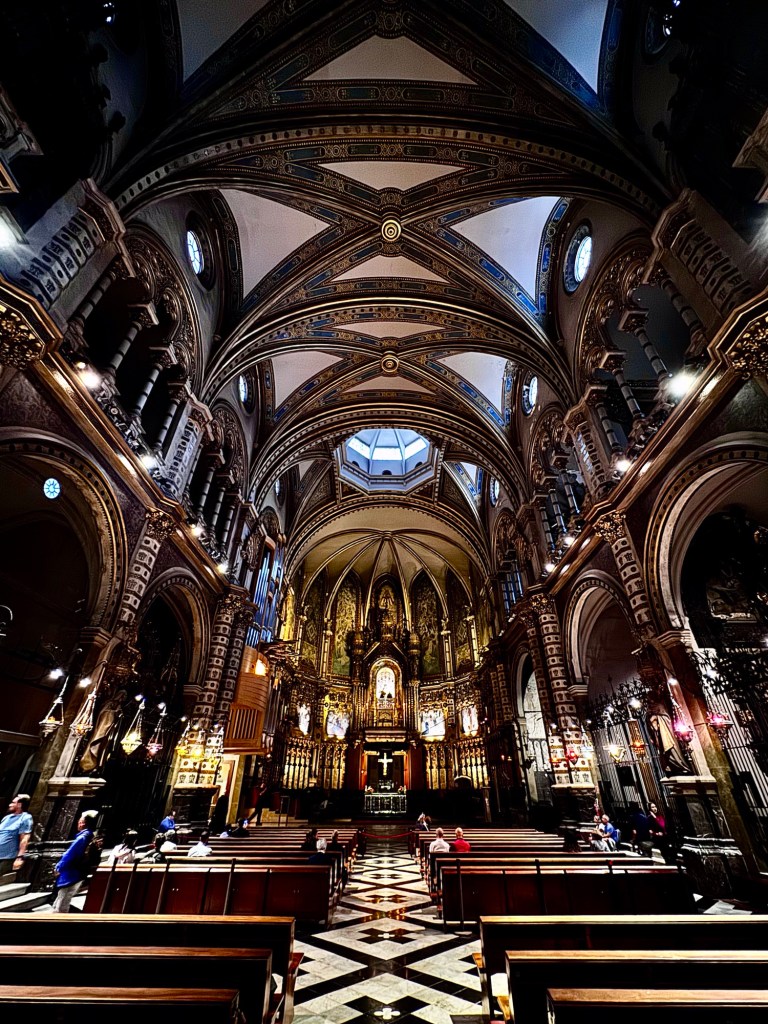
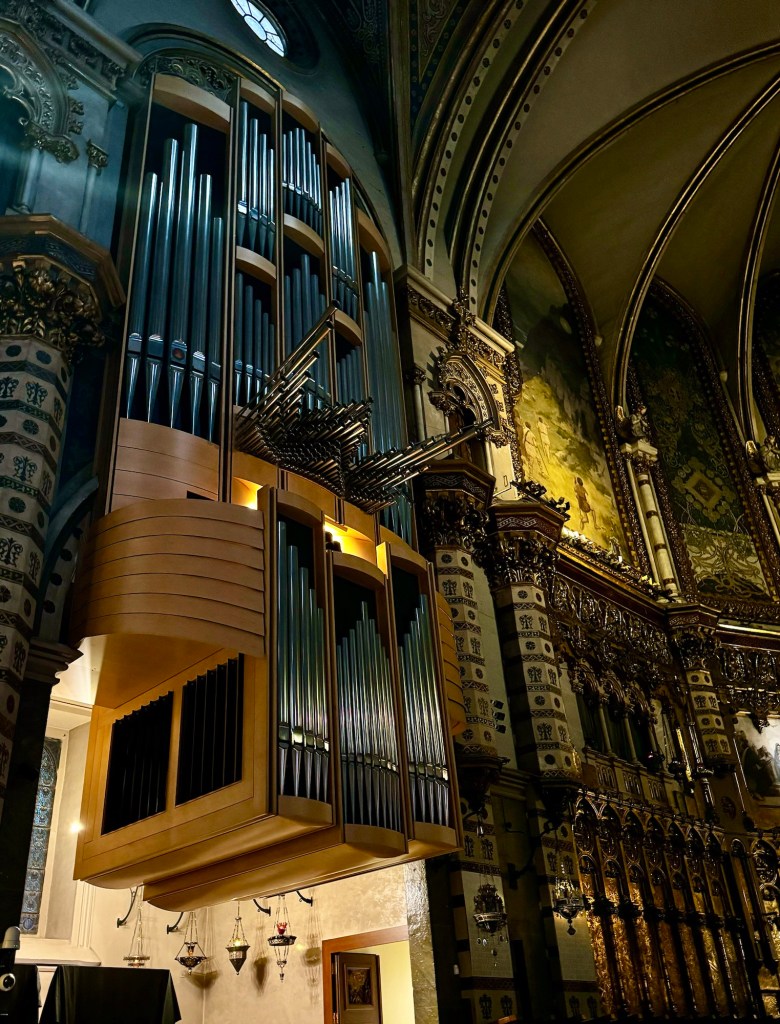
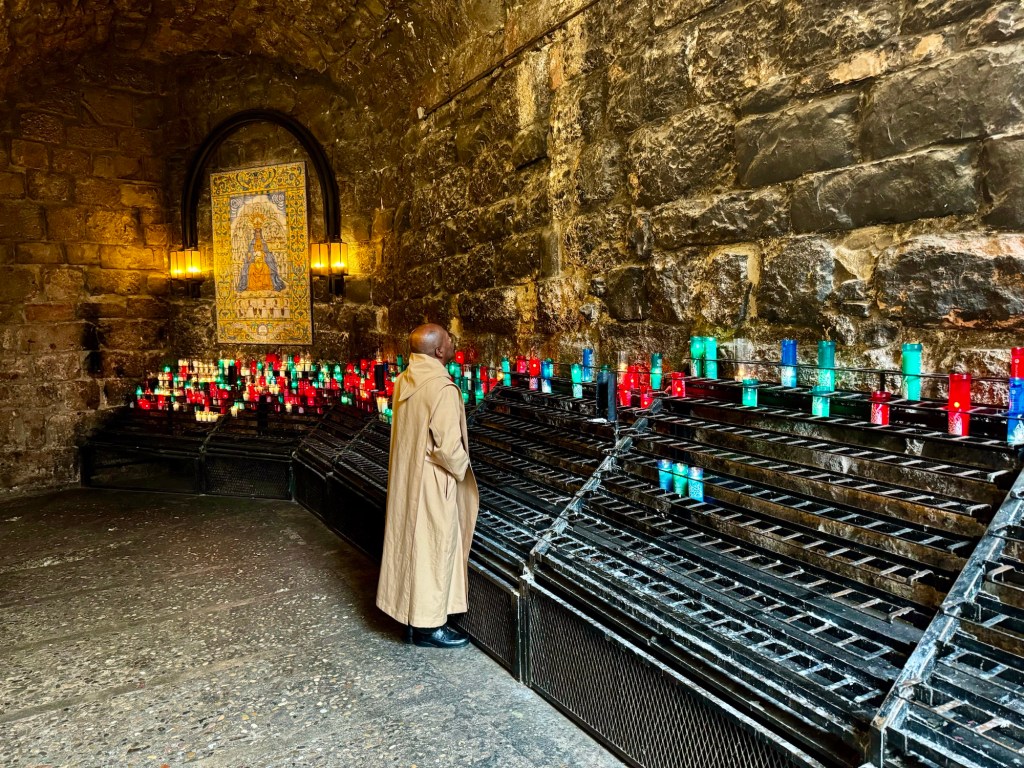
Once inside the basilica, it was incredible to see how ornate everything was. When I had booked the tickets, we weren’t able to secure a time for the Black Madonna, which is why a lot of people make their way to Montserrat. It was fun to pop around into the different chapels and other areas outside of the basilica.

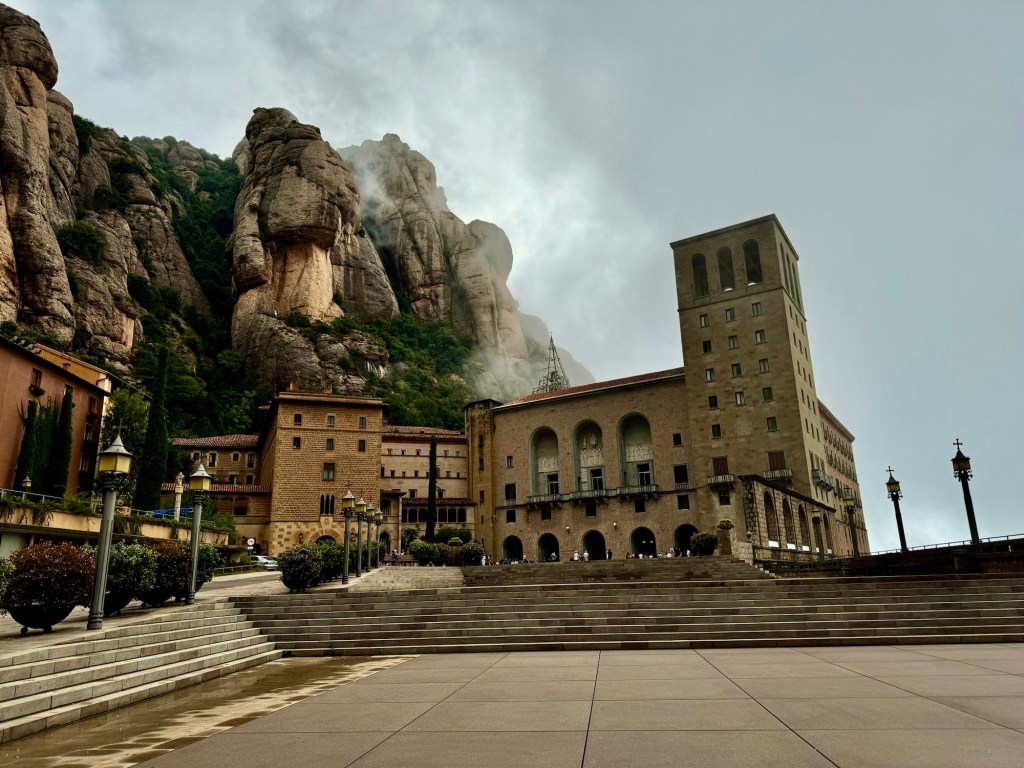
The cloud cover really made the whole place feel really moody – and I wish we could have seen it with clear skies. However, it was a really cool view with the clouds. Sort of spooky!

We were deciding if we wanted to go into the museum that opened at 10, or if we wanted to do the aerial tram or funicular to explore further. We ran into some accessibility issues, and I was also concerned how much more we could see because of the cloud cover. We ended up making our way down the mountain to begin our wine tasting.

One of the other wineries had recommended a winery to Jon, but unfortunately, Google maps took us to a more residential looking place. A bit disappointed, we made our way over to a winery that Jon and Yvonne had visited on their last trip to Spain, Frexienet.

The visit started with a short video on the history, and then we were able to dive into the tasting. The tasting came with four different cavas, and they were each paired with a different food. Our server was pretty young, and he was going to be heading to Washington soon for school. He was super knowledgable and really gave us a great experience.

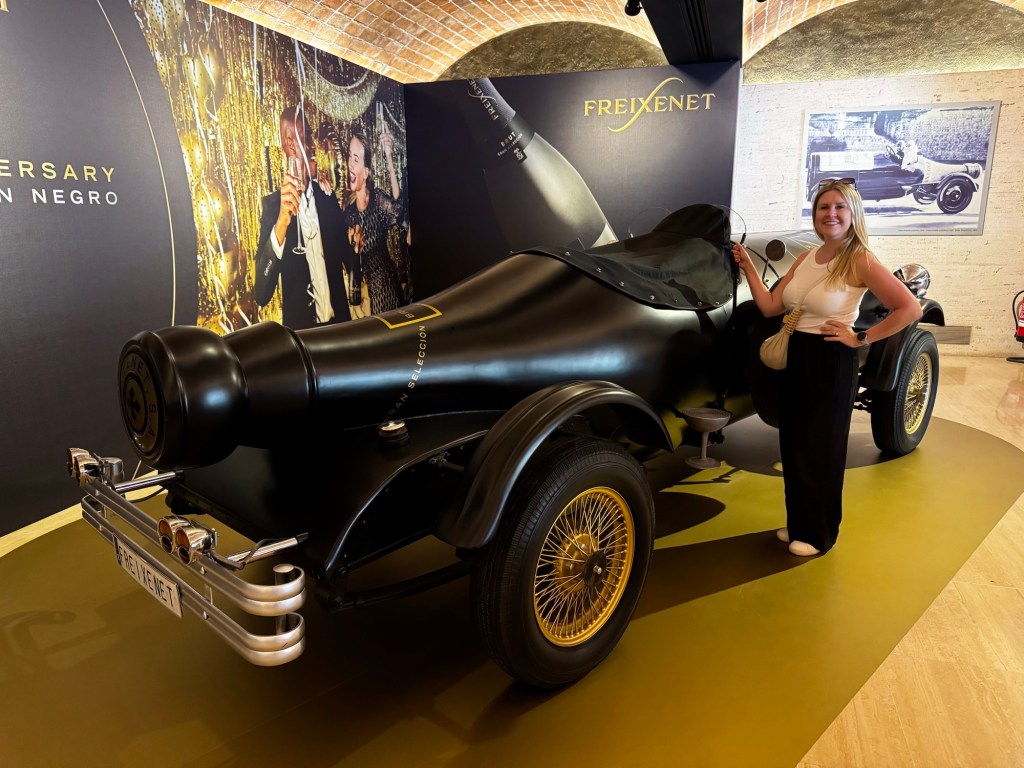
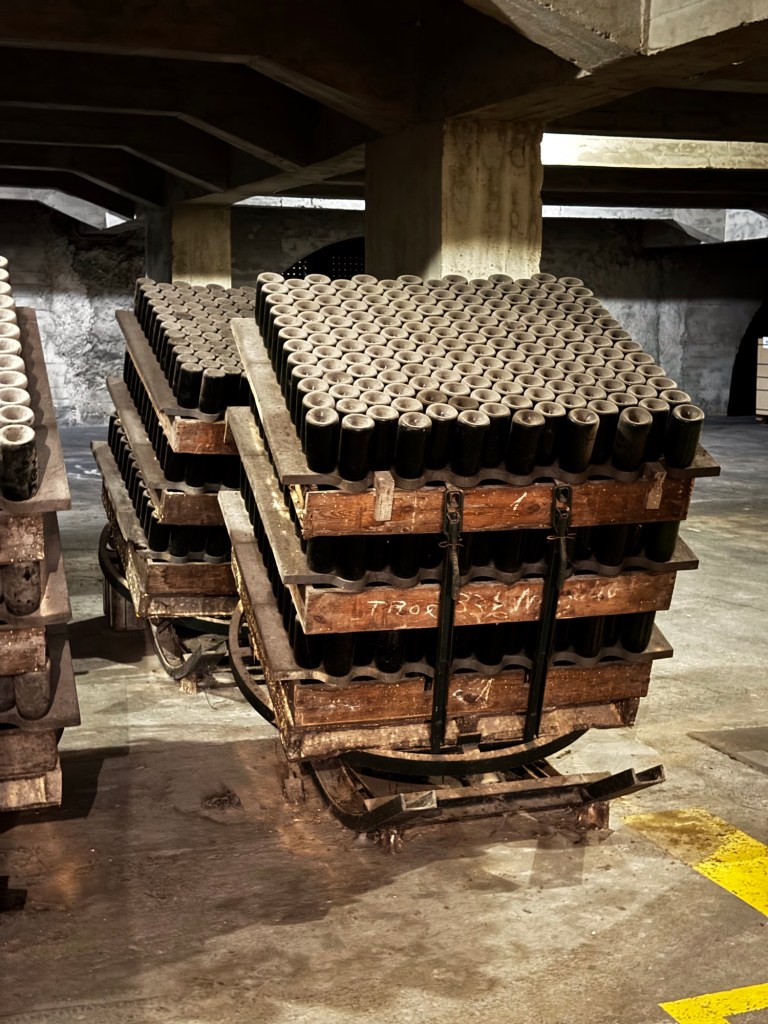
The bottle shaped car!

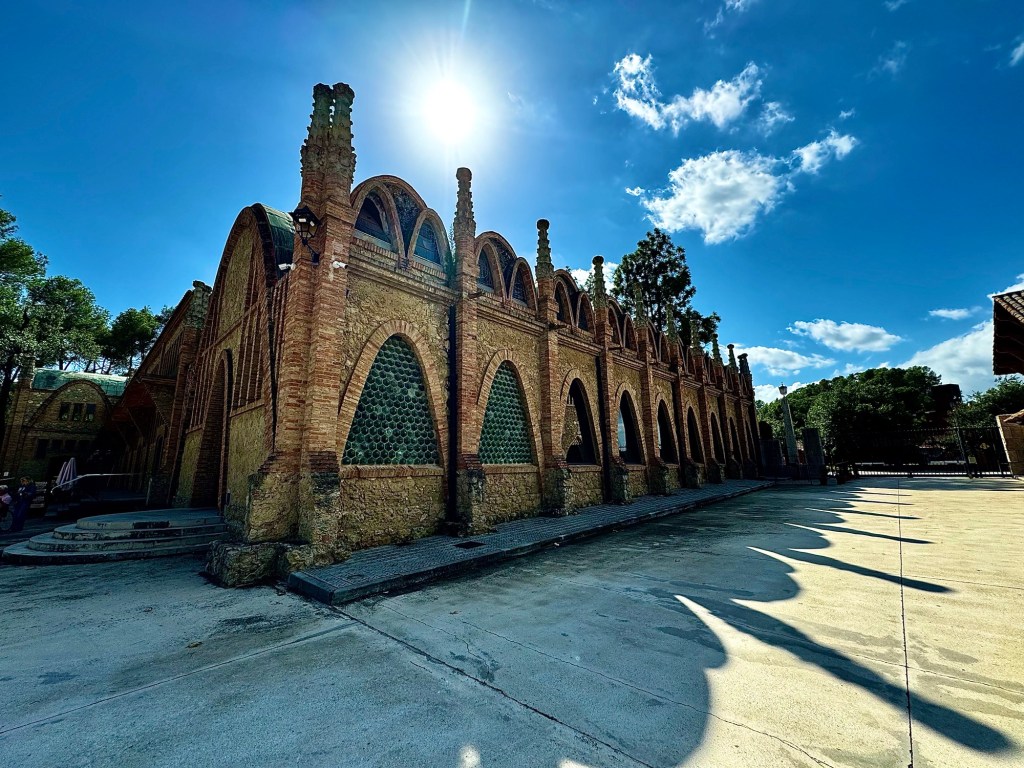
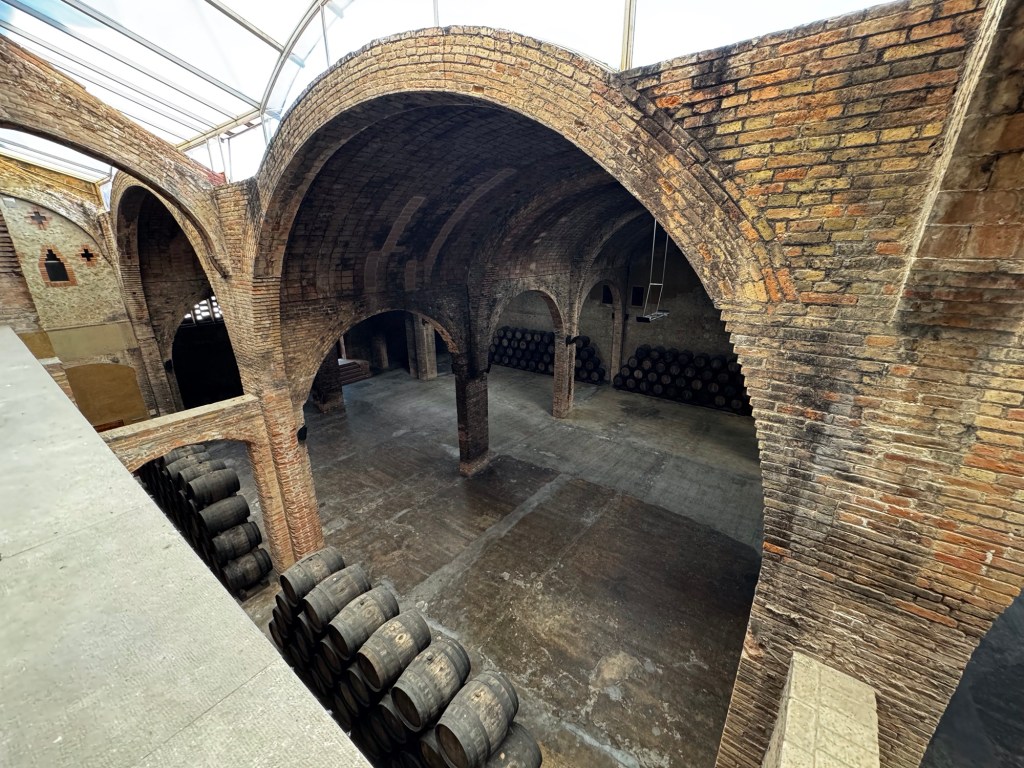
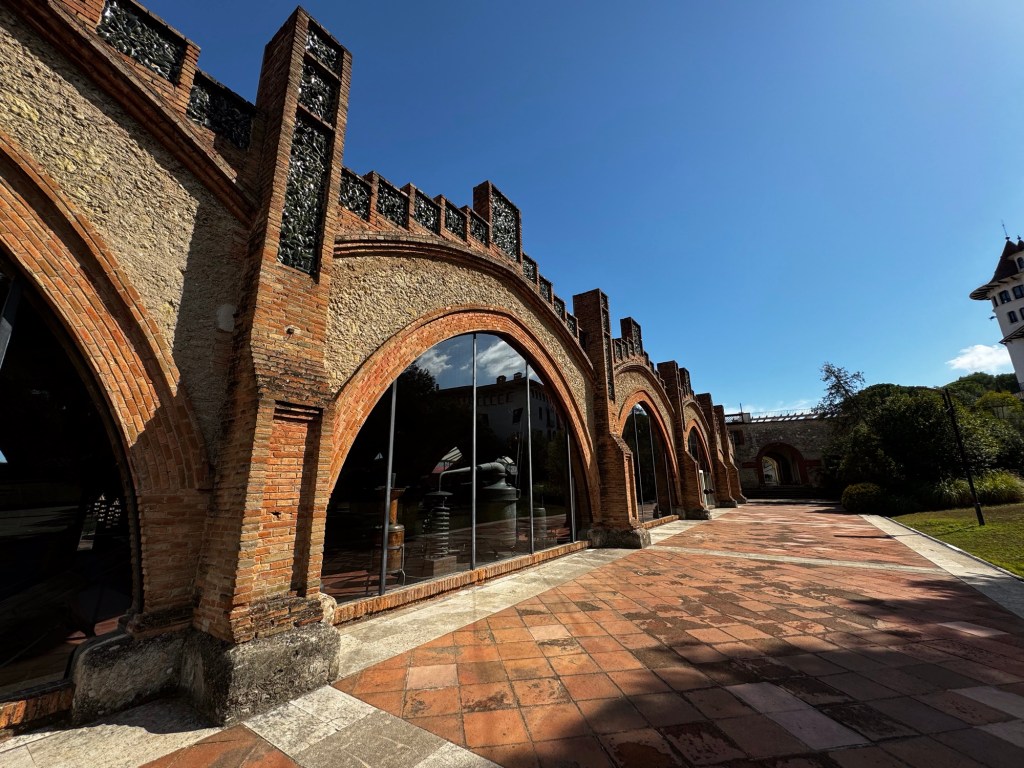
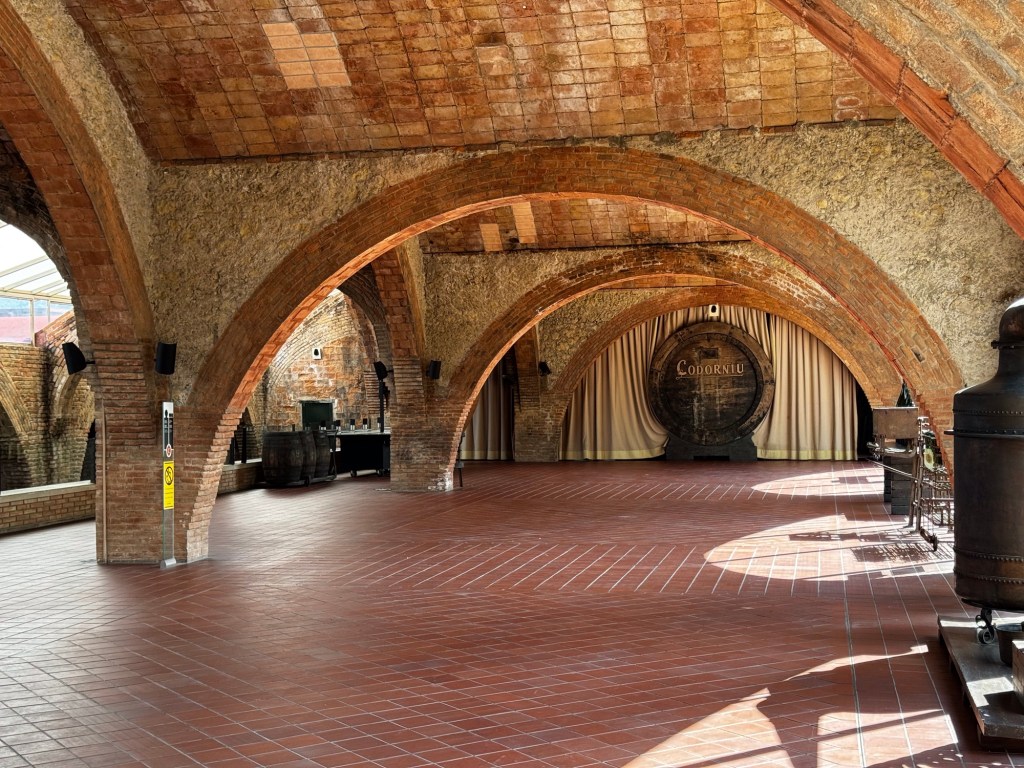
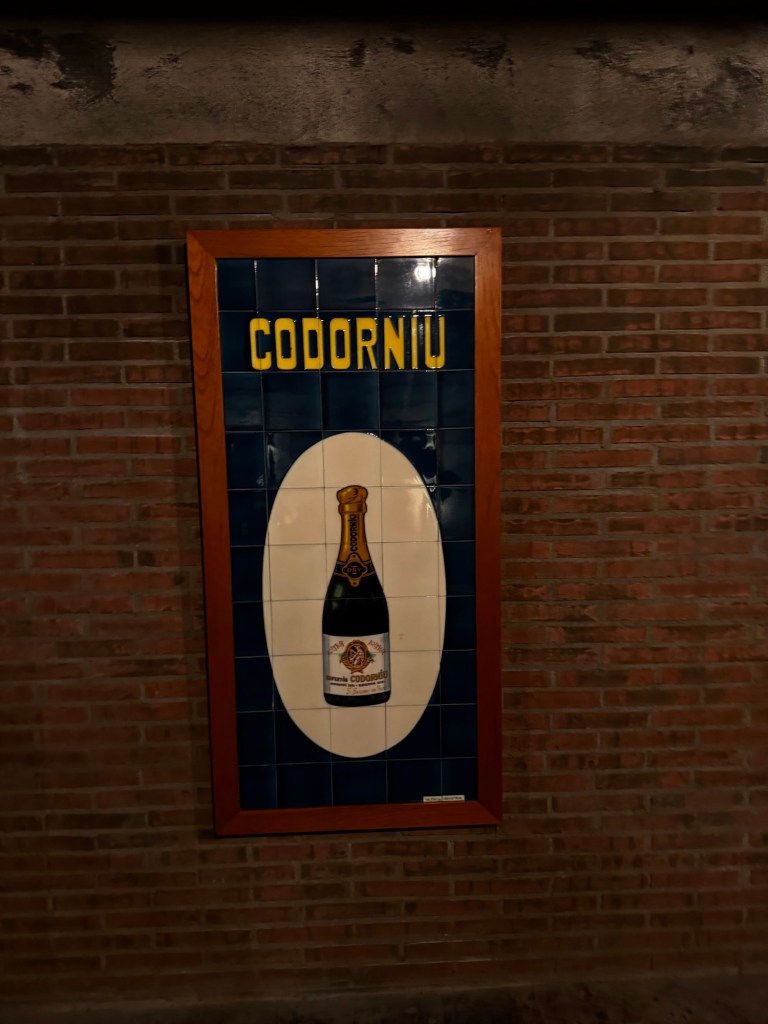
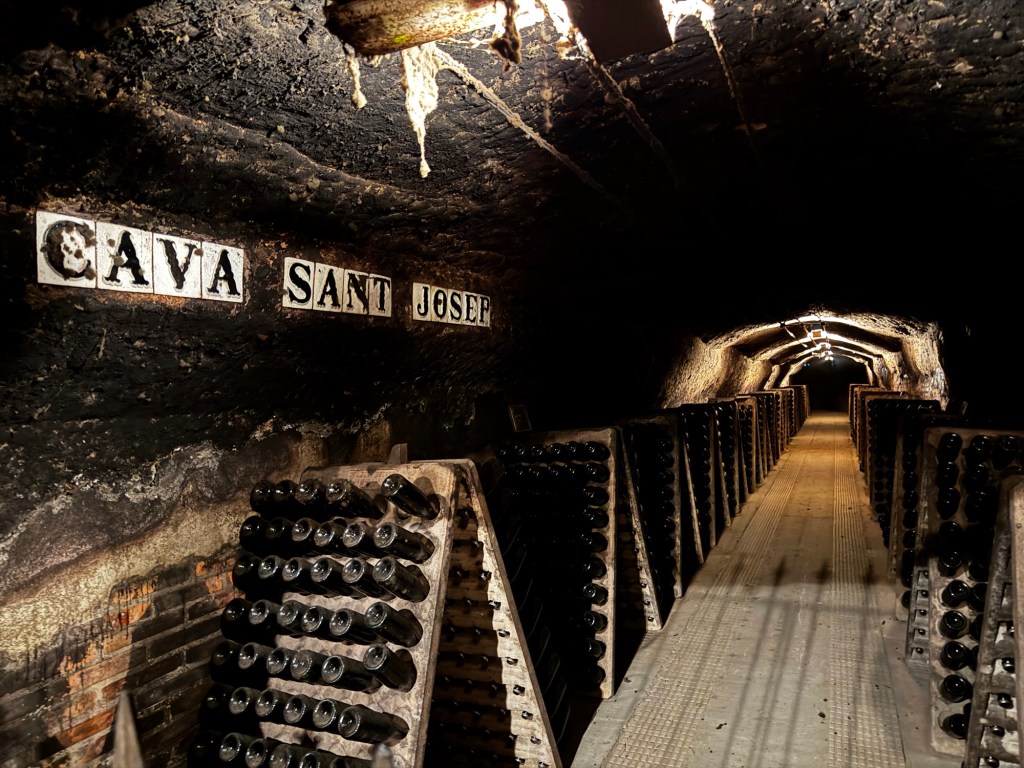
From there, we made our way to Codorníu, another cava house. We had a tour booked at this one – which we were pretty excited about.

Codorníu is one of Spain’s oldest and most prestigious wineries, it was founded in 1551 by the Codorníu family. In the late 19th century, Joseph Codorníu recognized the potential for sparkling wine and adopted the traditional méthode champenoise, establishing Codorníu as a leader in this genre.

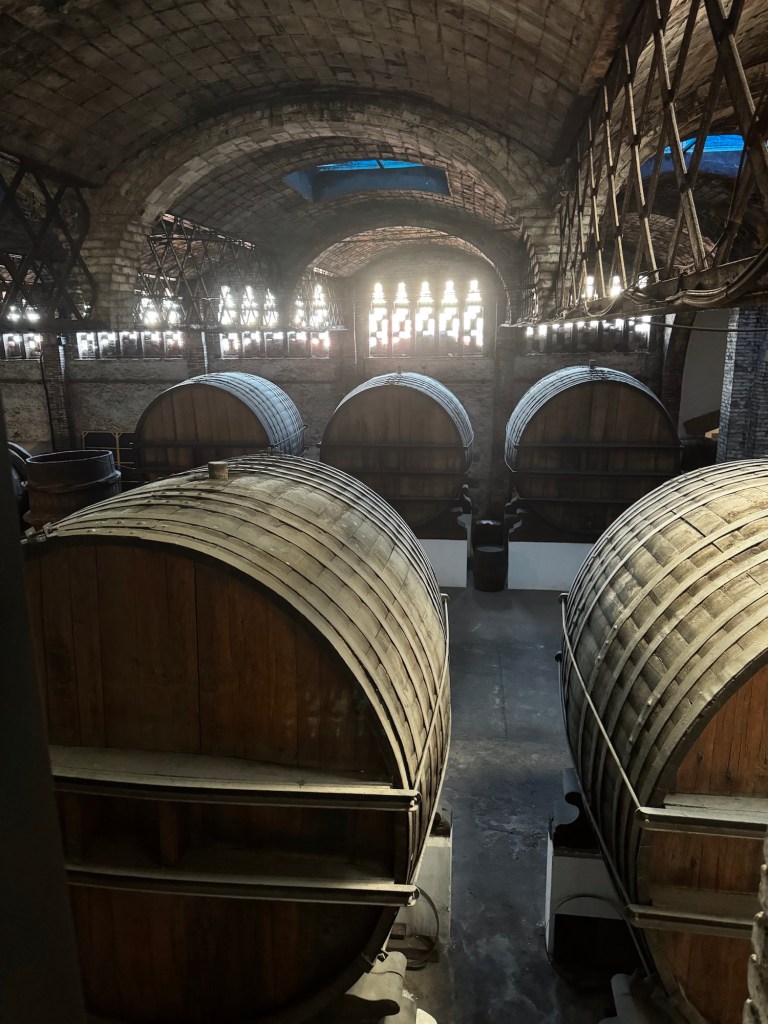
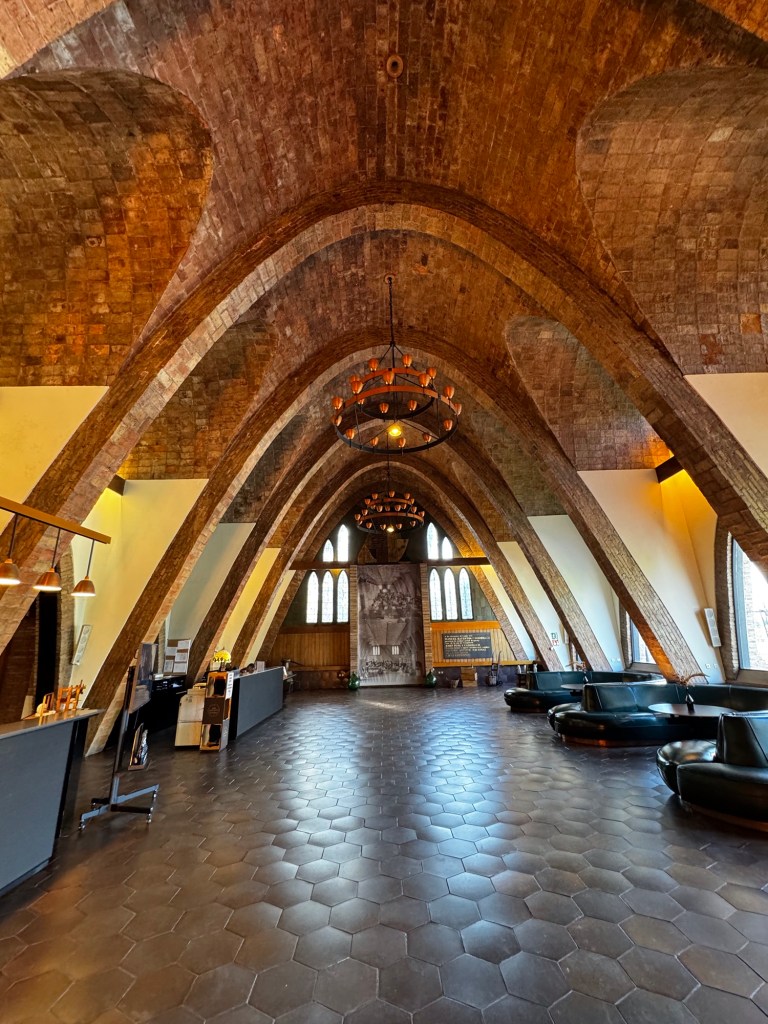
The winery is renowned for its stunning modernist building, designed by architect Puig i Cadafalch in 1895, which showcases Catalan modernist architecture. This historical site features beautiful arches and an impressive setting, reflecting the winery’s rich heritage. Over the centuries, Codorníu has continued to stay relevant, which means it is still competitive in the market today!

Codorníu primarily utilizes indigenous grape varieties like Macabeo, Xarel·lo, and Parellada, alongside varieties you might recognize, such as Chardonnay.

No surprises here, we ended up shipping a case home from our Cava tours to enjoy in the future!

After our last tasting, we ended up eating something light at the hotel since we had an early morning flight back home!

Up Next:
– Highlights of Spain/Portugal
– Closing thoughts and next adventures

Jordan – Day 3 (Petra!)

The Lost City. There’s so much more to Petra than the Treasury!

We had an early start for Petra – which we were happy to get up early to go back after getting a small sneak peek the night before. We have about 14 people in our group, and at times it seems challenging for our guide to get us all together. A few of us joked it was like herding cats!

It’s not a long walk down to Petra, probably about 30 minutes on a downhill slope. There are other ways to get down there – you can pay for a golf cart (I think about 15 Jordanian dinar one way), and taking a horse down is included in your ticket. However, someone will lead the horse down with you and they expect a tip. Our guide recommended 5 JD, but we didn’t mind walking.

The walk was much easier in the daylight, as you could see the gaps in the stone. We found out that the reason why the road had different types of terrain was because when the Romans took over they put in cobblestone roads. (Where didn’t the Romans reach?!) A few different floods had washed out the stones and they were replaced by pavement.

Some sections they filled in the gaps between the stones to make it a bit smoother, but other sections you really do need to tread carefully. Because we had our guide, we learned a lot more while we were walking in vs. Petra by night where we were on our own.

The Nabatean people were the people who lived in and carved all of Petra. They really rose to power in 1st century BC, and that was when Petra was built. At its peak, it was home to over 30,000 people. Isn’t that crazy!?! Petra was a trade hub – it connected Arabia, Egypt, Greece, China, and regions across the Mediterranean Sea. Over time, this made the Nabatean people very rich.

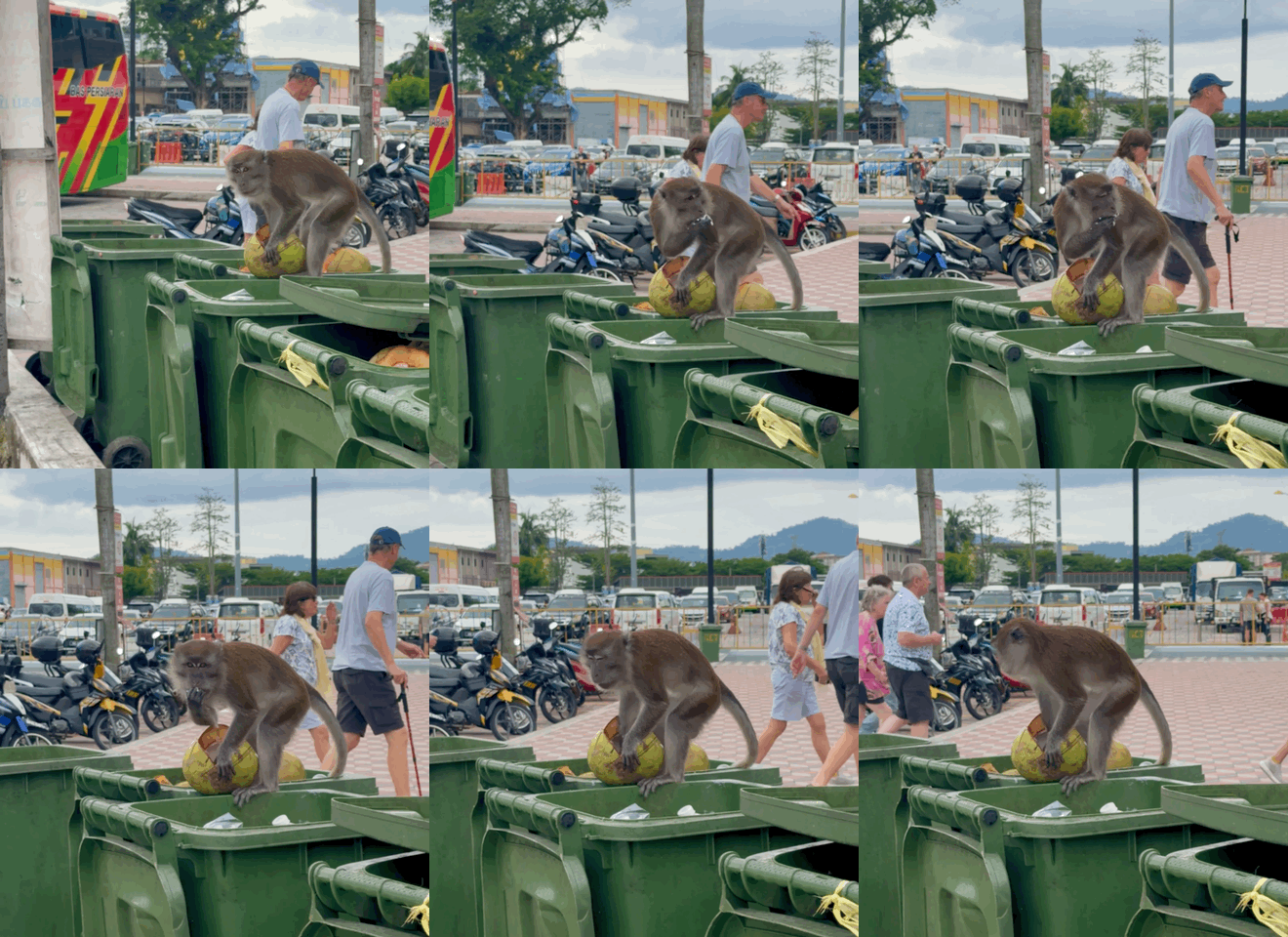
On the hike down we saw some wildlife

Very advanced at the time, you could actually see the way they routed water into their city by using terracotta pipes. They also harnessed the power of natural springs, and created underground cisterns for storage. They had numerous temples, villas, theaters, and elaborate tombs for both the VIPs and the normal people.

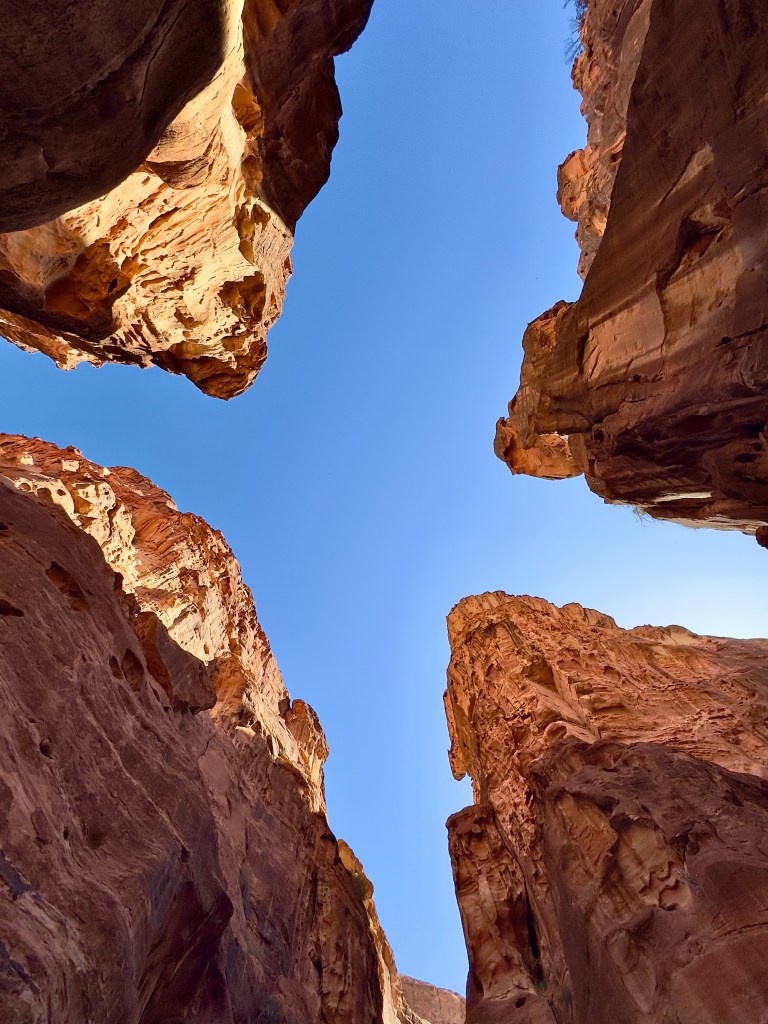
The slot canyon was our hike down, it reminded us of Utah!

We were shocked by a few things: there were actually quite a few toilets along the path (with running water!) and tons of little shops with water, soda, snacks, etc. Of course there are a million stands that are selling souvenirs as well. It was great because you didn’t need to worry about carrying a lot of water. You could always stop and pick up a cold bottle when you wanted.

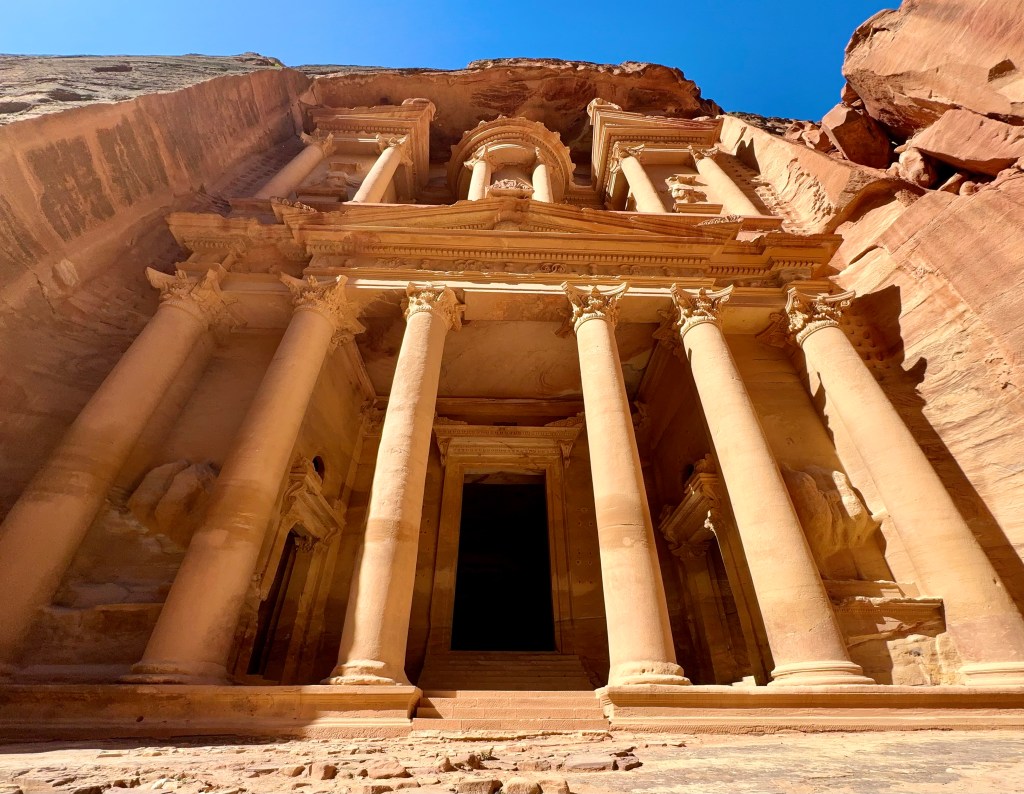
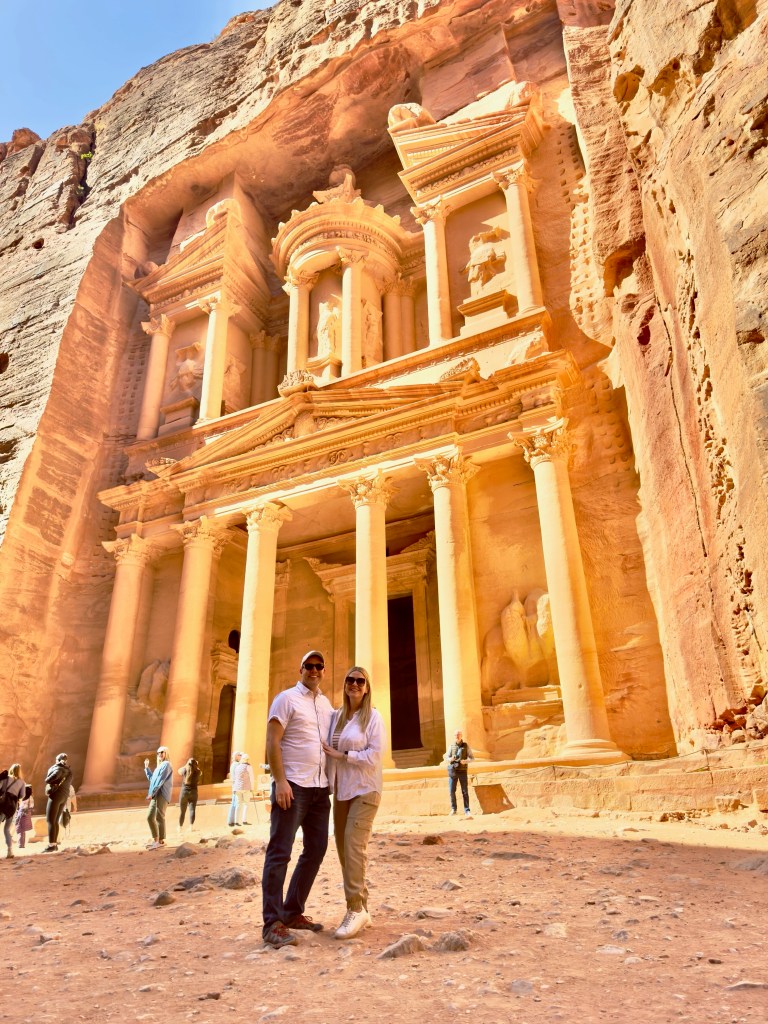
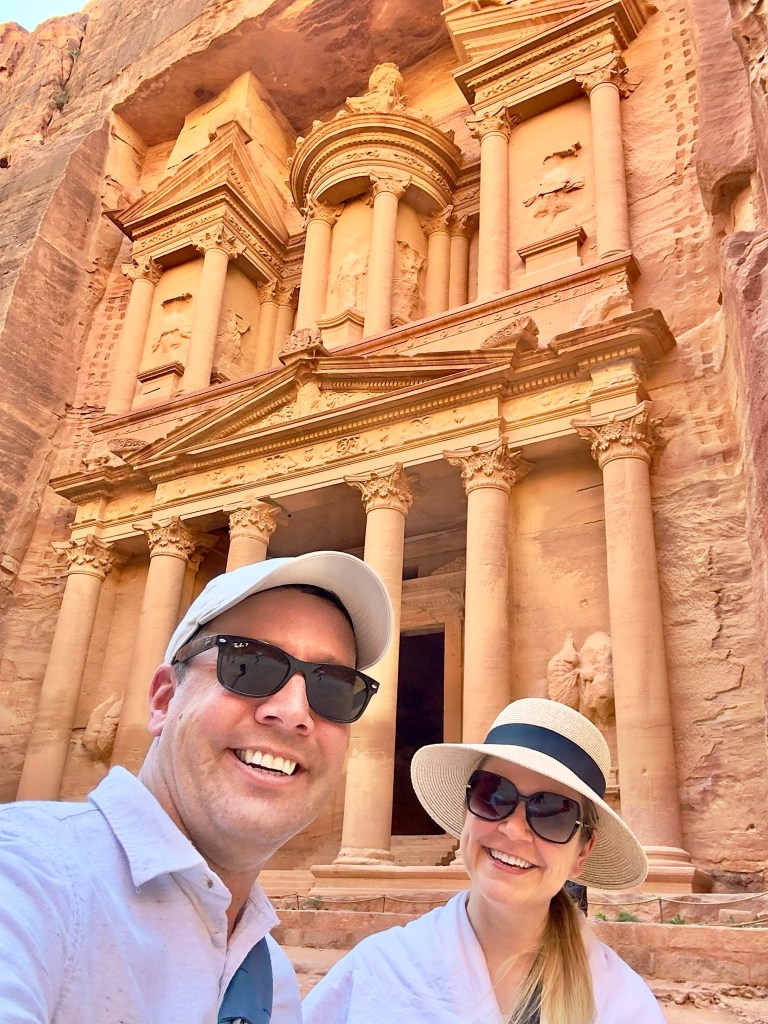
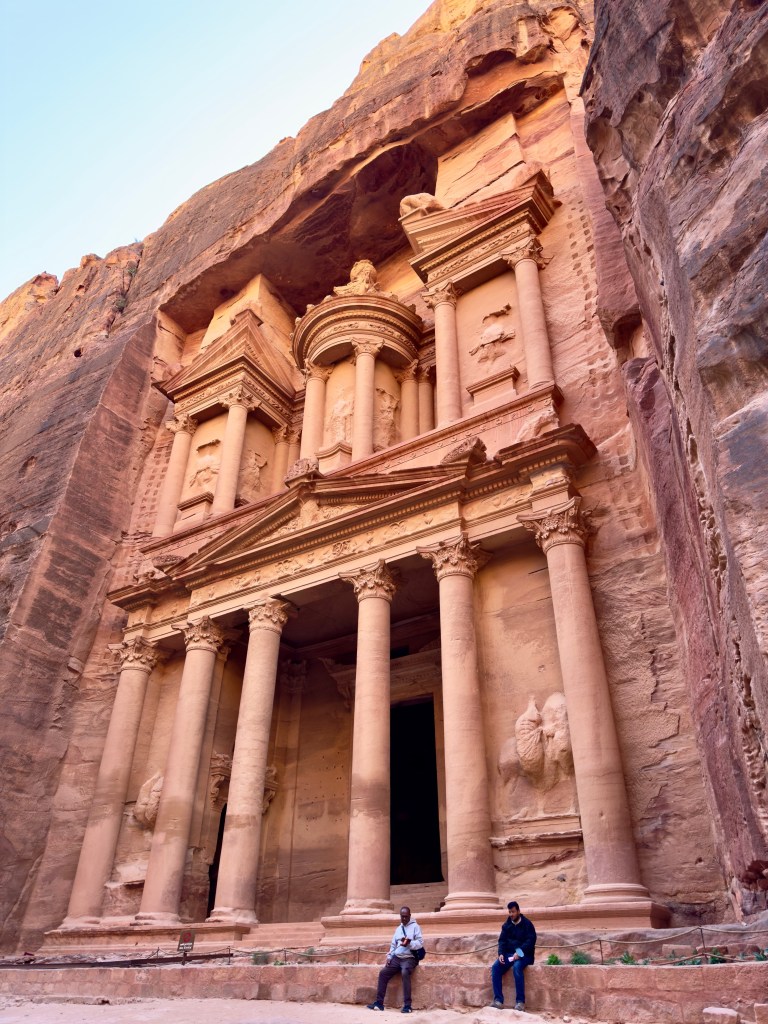
The Treasury, one of the most famous Petra sites

As we walked we continued to see the Roman influence on the region. A large amphitheater that could hold 3,400 people (the size of my hometown!), and some of the architecture. Although, to be fair, the Nabatean people were well traveled and since they were a trade hub, you could see influences from other regions.

So many camels littered throughout the area!
A Roman theater
The Great Temple
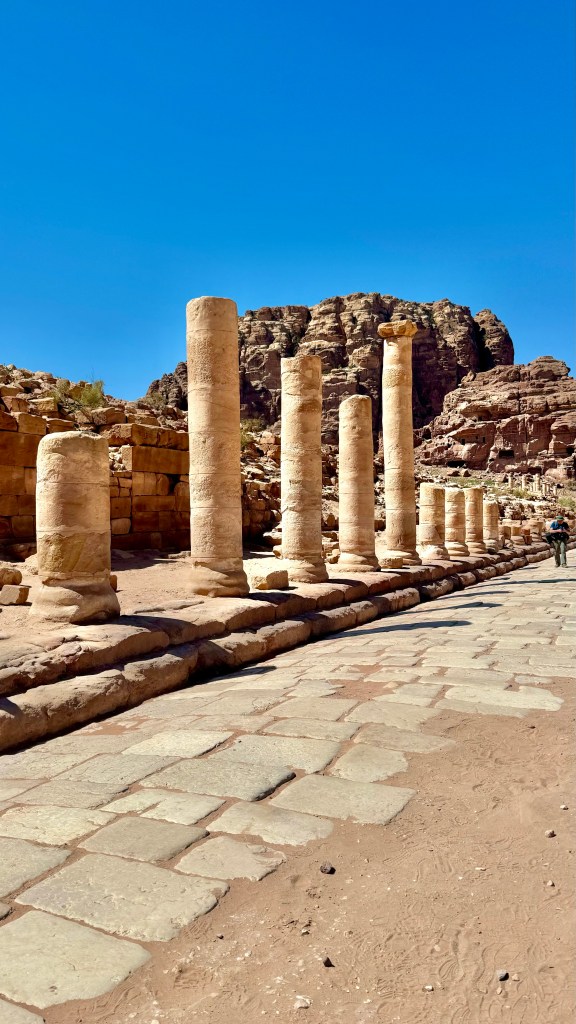
Some of the main street

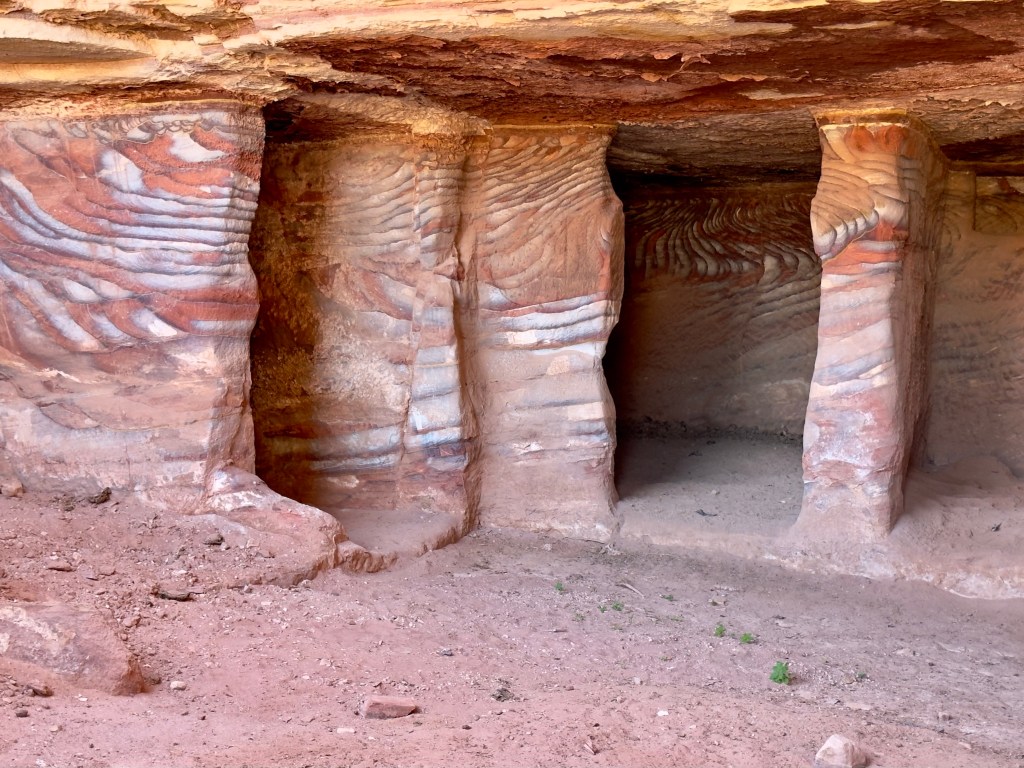
The sandstone had some amazing colors naturally blended in from all of the different minerals that were mixed with it, it was beautiful to see!

The large group of us had lunch together, and then we had a few hours of free time. We decided instead of heading back to the Treasury, we were going to tackle the Monastery. I mean, it was only about 800-900 steps that were littered with donkey poop… so why not?

Most people from our group opted out of the Monastery hike, but we knew we would have plenty of time so we set out. It was steep – and the steps were uneven. However, if you take your time you can do it if you take your time! One thing I found interesting with both our group, but also hearing conversations in Petra was that the number of Americans were small. Yes, there were other English-speakers, but a lot are from the UK. The trail was scattered with people from all over the world!

As we climbed, we crossed even more shops and stands trying to sell you a cold drink or souvenirs. Honestly, I didn’t want to add the extra weight as we were climbing. It wasn’t even that hot! But we were working up a sweat as we climbed the stairs.

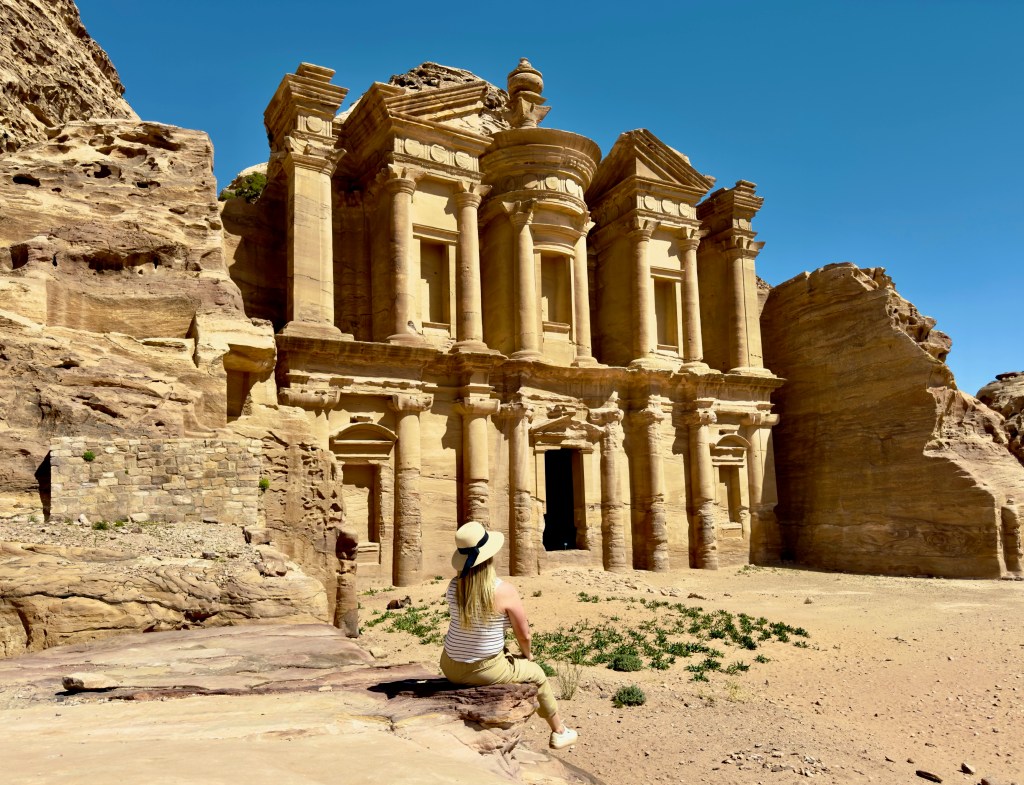
The Monastery

It was well worth the effort, there were hardly any people up there! So we walked around a bit – we saw there were signs for other points and in handwriting “Best view in all of Jordan.” But our legs were tired – supposedly it was a 3.5 mile hike in from the visitor center. I didn’t log the hike on my watch since we stopped so many times when we were with the bigger group.

We made our way down and then towards the visitor center. I would be lying if I said I wasn’t tempted to take a golf cart to the visitor center. But we walked the whole way! We totaled 22,000 steps that day. Woof. My legs still ache as I write this 2 days later!

What surprised me the most is when I think of Petra, I only think of the Treasury. But this is a CITY. It’s incredible. I wish we had more time, and we would have if we hadn’t been with such a large group. I don’t think we will be back anytime soon, but there was so much that we missed out on!

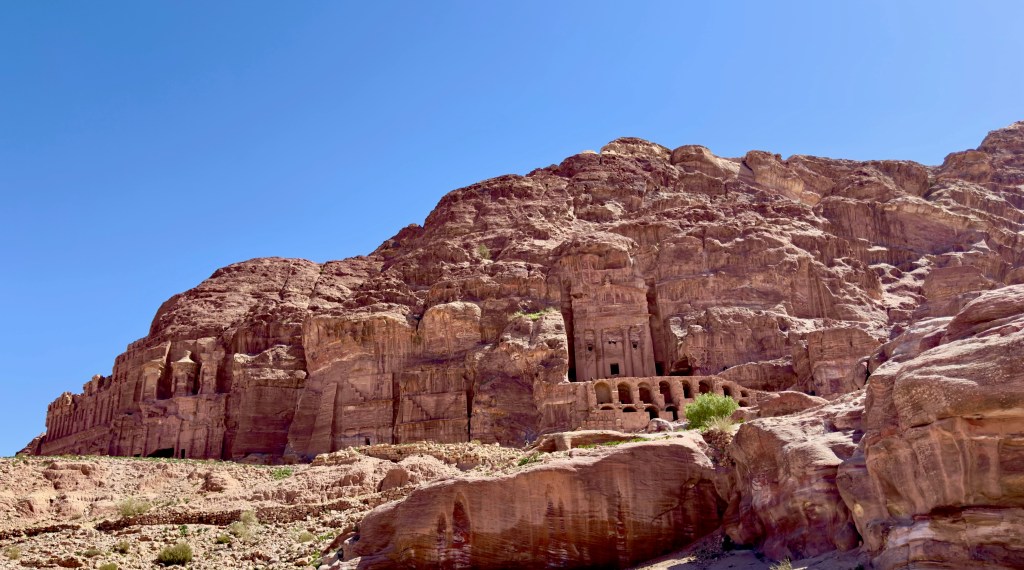
Everywhere you turned, there were more!

We still had an hour to kill so we found one of the only hotel bars in the region that served wine – so we went there and ordered pizza. At 5 pm, our bus brought us back to our hotel where we were rather worthless.

It was a great day.

Hotel:

RN Petra

Up Next:

Wadi Rum